
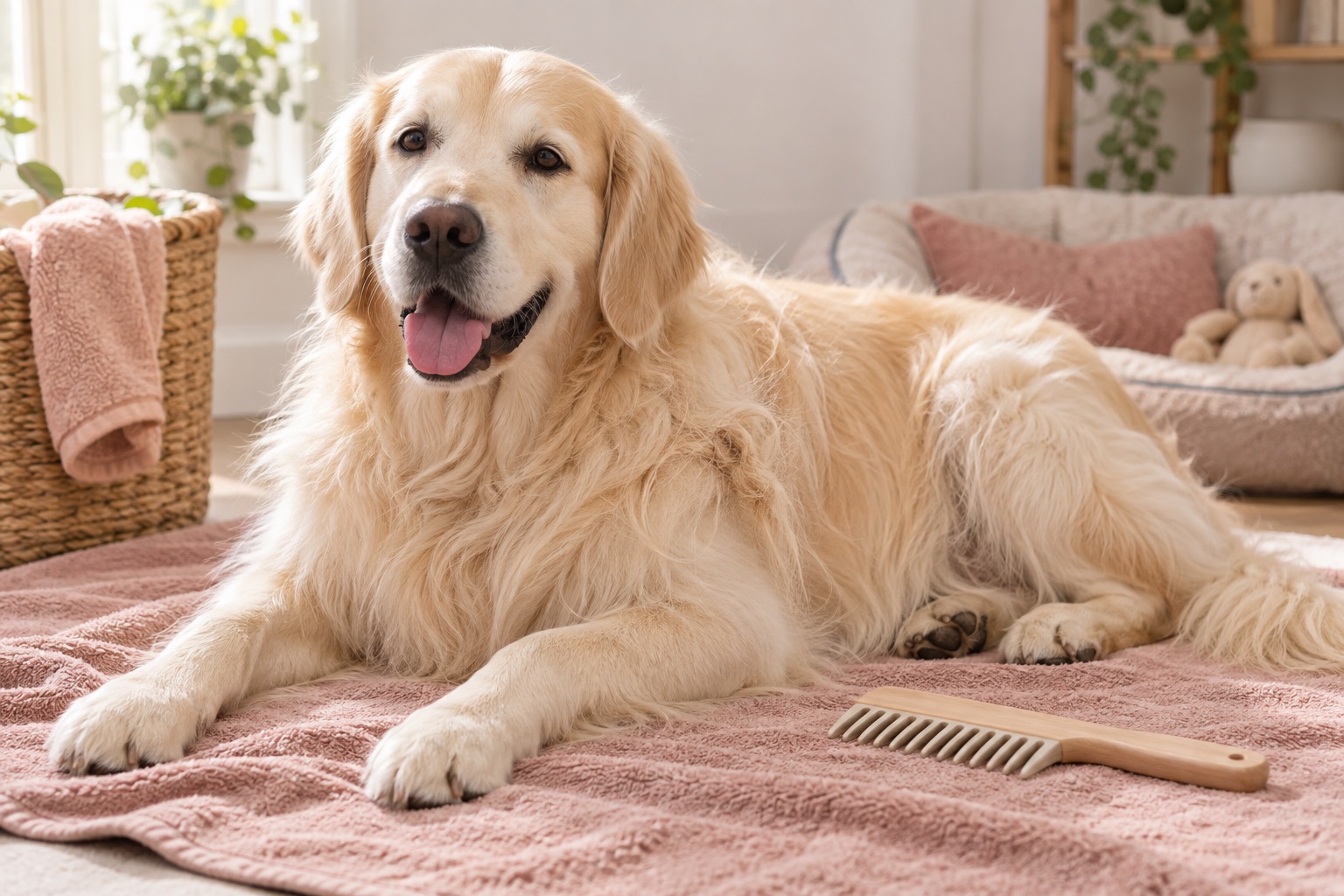
Before You Begin
Salon work does not replace a little home maintenance. A few regular minutes help you notice loose hair and early tangles, while giving your dog a chance to become comfortable with handling. There is no single schedule for every coat: short, double and curly coats behave differently. Begin with a routine your dog accepts calmly, then adjust it to the season and what you actually see.
Match the tool to the coat
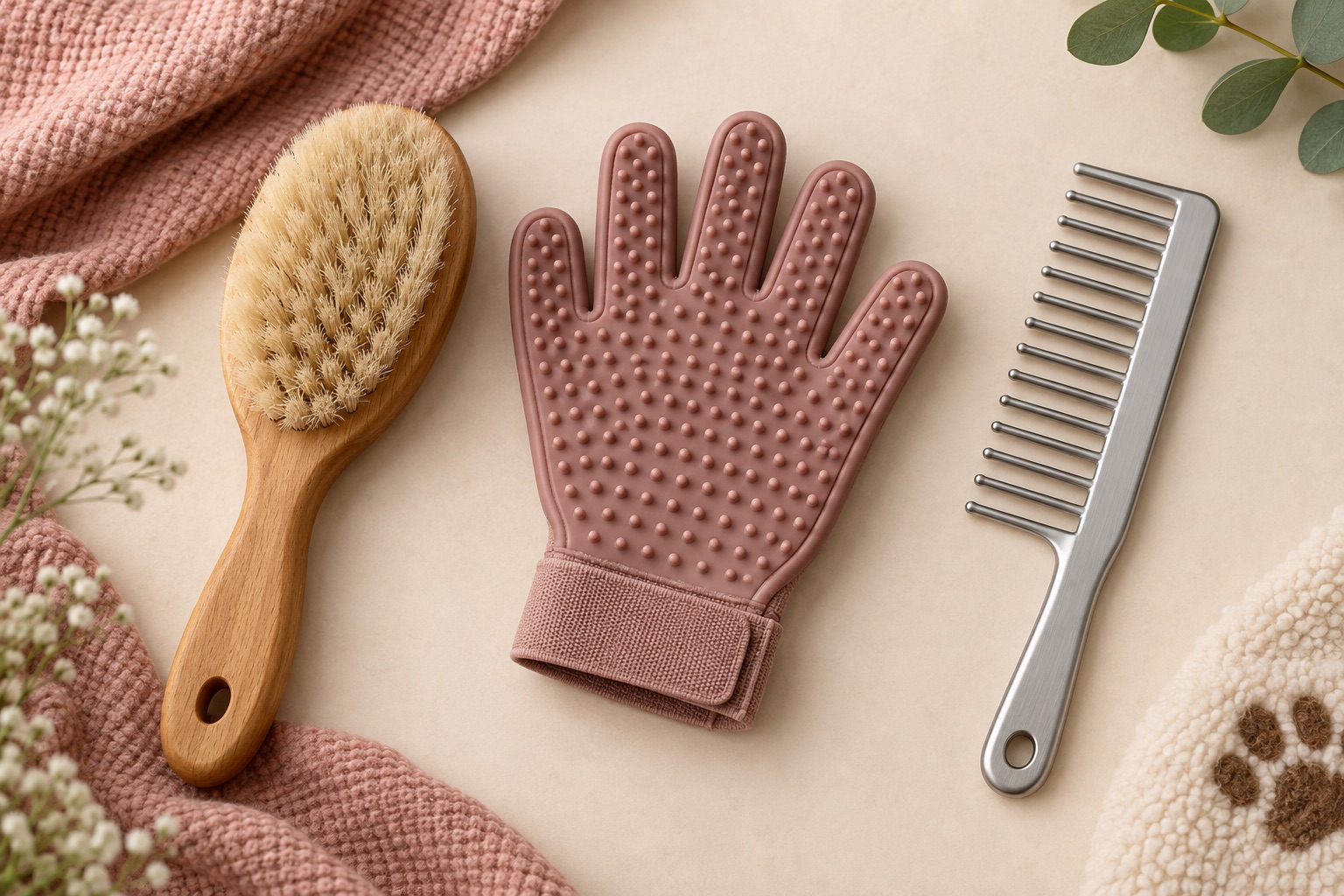
A soft brush or grooming mitt can work well for short hair. For a longer coat, use a suitable comb on small sections, working gently from the tips inward. With a double coat, the aim is to release loose undercoat gradually, not scrape the skin with repeated hard strokes. If you are unsure, ask your groomer to demonstrate on your own dog and explain which tools to avoid.
Keep sessions short and consistent
Choose a quiet time and a stable surface. Start where your dog is comfortable, work through layers and finish before they become tired. Check behind the ears, under the legs, beneath the collar and where a harness rubs. For curly coats, inspect below the visible surface; a neat top layer can hide tangles close to the skin.
Bathing and drying at home
Bathe according to your dog's individual needs with a dog-specific product, rinsing thoroughly. Dense coats take time to dry comfortably, and damp areas can tangle more easily. Do not start a bath when there is not enough time to finish it calmly. Use a comfortable temperature and pause if the dryer noise upsets your dog. High heat and forceful restraint do not improve care.
When to seek help
A tight mat against the skin, a painful area or a dog who consistently rejects touch needs professional assessment. Household scissors near the skin are risky. A sudden change in coat density, smell, skin appearance or scratching habits calls for a veterinarian. At the next appointment, tell the groomer which home routine worked and where you struggled so the plan can be adjusted.