
Before You Begin
A first appointment introduces your dog to a new room, people, sounds and equipment. Preparation is not about making a dog tolerate everything without moving. It gives the groomer useful information and makes the experience more predictable. A dog that accepts baths at home may still find a grooming table and professional dryer unfamiliar. Leave room in your schedule so neither of you has to rush afterward.
In the days before the visit
Briefly touch paws, ears and the collar area, allowing your dog to move away. Praise a calm response or offer a treat. You can show a comb and an unplugged dryer from a distance without forcing noise or contact. If your dog is very fearful, do not turn preparation into a prolonged training session; mention it when booking. Send a current coat photo and note mats, sensitive spots and the date of the last grooming visit.
On appointment day
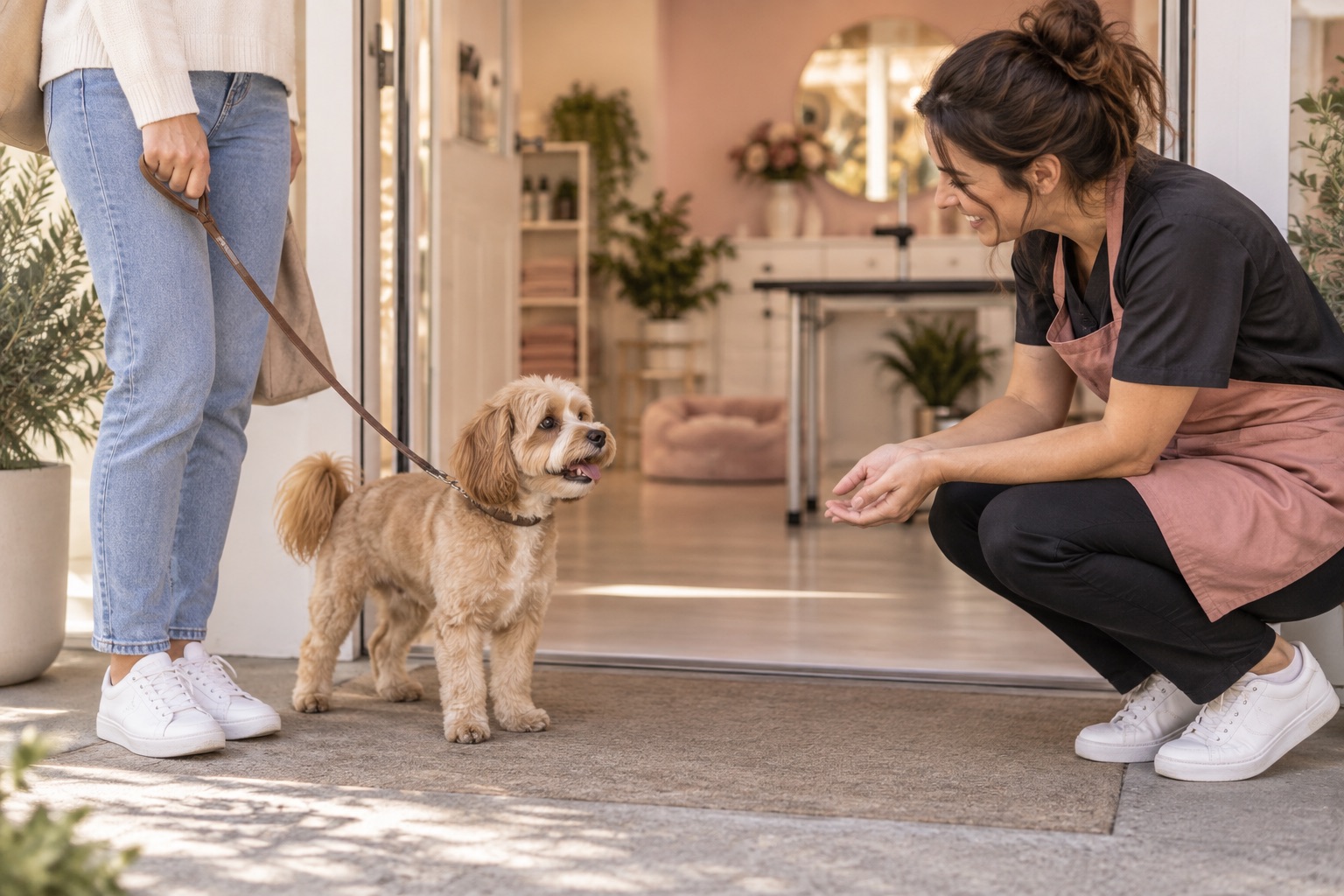
Allow time for a short walk and toileting, bring a secure lead and arrive a few minutes early. A large meal immediately before travel is unnecessary. If your dog gets muddy or develops a new tangle, simply tell the team. Do not cut close mats with scissors or deliberately exhaust your dog to make them compliant. Bring any information the salon requested in advance.
Talking to the groomer
Describe how your dog responds to baths, brushing, noise and paw handling. Explain the look you prefer, while allowing the plan to change if the coat is tangled or your dog needs a break. Ask what the appointment includes, how long it may take and how pickup will be arranged. A short, confident goodbye is often easier than a drawn-out one at the door.
After you get home
Give your dog time to rest and gently check that they are comfortable. Ask which areas needed extra care and which tool would help between visits. Pain, a wound or a sudden behaviour change calls for veterinary advice. A good first visit does not have to include every service; a shorter introduction can build confidence for next time.