
Before You Begin
The right service starts with the coat your dog has today, not only with a breed label. Two dogs of the same breed can have different undercoat density, mats, touch sensitivity and home-care routines. Share the current picture when booking, then let the groomer recommend an appropriate service and realistic appointment time.
Short, smooth coats
Short-haired dogs shed too. They often benefit from gentle bathing, comfortable drying, loose-hair brushing and nail care when needed. Hair around the home is not automatically a reason for a haircut. If the coat looks normal and touch is comfortable, brief regular brushing between appointments is usually useful.
Double coats and undercoat
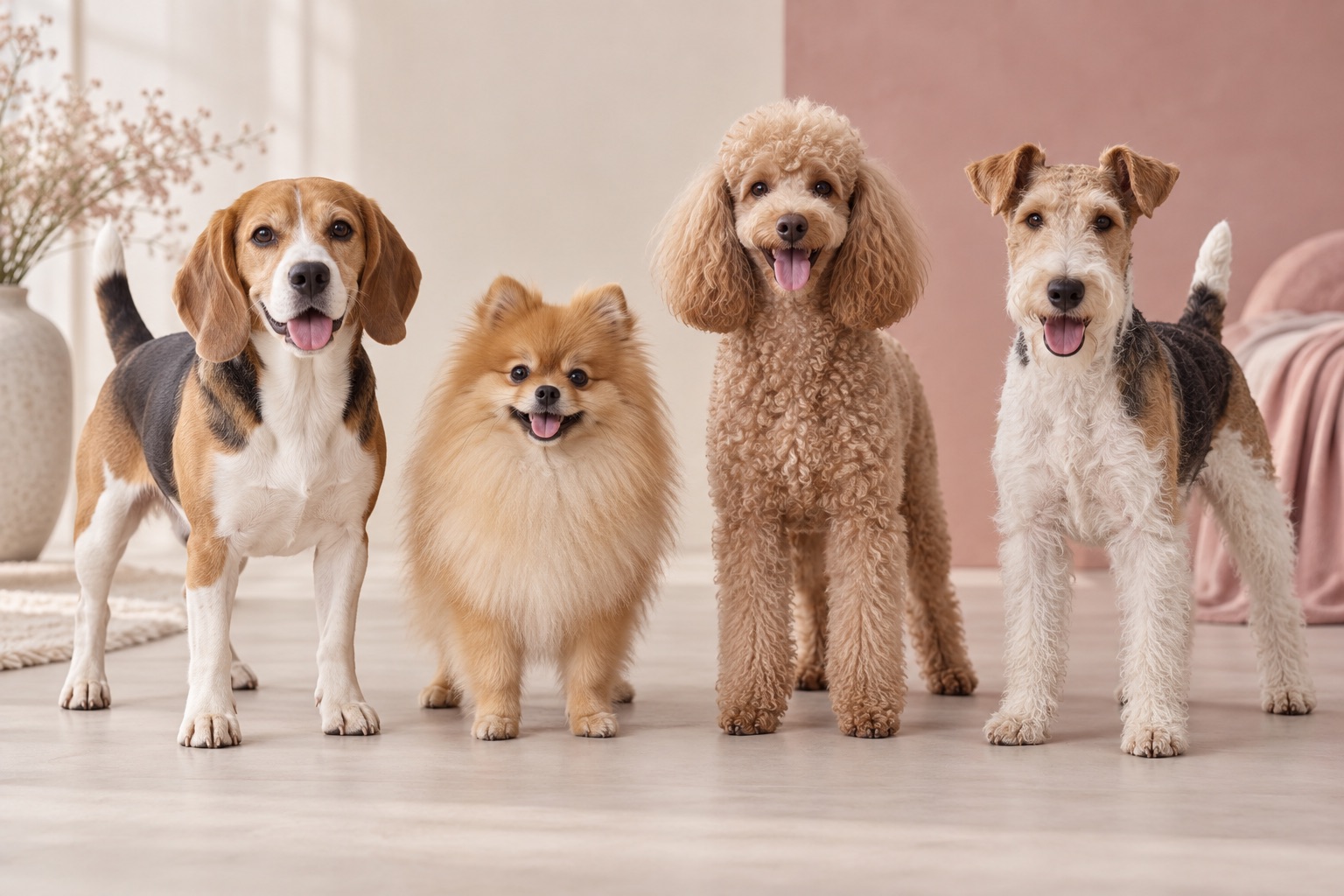
Dogs with a dense undercoat, including many spitz-type dogs, may suit deshedding: bathing, drying and gradual removal of loose undercoat. It does not permanently stop shedding and it is not the same as shaving. Do not assume a double coat should be shortened; coat condition, mats and the desired result all matter.
Curly or continuously growing coats
Poodles, bichons and similar coats often need gentle brushing through to the base and a regular trim plan. A small tangle can worsen quickly when only the top layer is brushed. Tell the groomer whether your dog accepts a comb at home, when the last trim was and which areas are sensitive.
Wire coats and hand stripping
Some wire-coated breeds may suit professional hand stripping. This differs from clipper trimming, so send a current photo and ask whether the coat is suitable. Do not pull coat at home without training.
What to share when booking
Include age, approximate weight, coat type, mats, touch sensitivity, previous experience and a daylight photo. Pain, wounds, unusual itching or sudden coat and skin change call for a veterinarian, not a grooming appointment. After an assessment, you can choose hygiene care, bathing, deshedding, hand stripping or a tailored trim.